

Europe locks in defense spending as US signals selective commitment
NATO reaffirms collective defense in Ankara while Germany pushes back on Trump criticism and Lithuania lifts its nuclear ban—signs that European capitals are preparing for a world where American security guarantees are conditional.
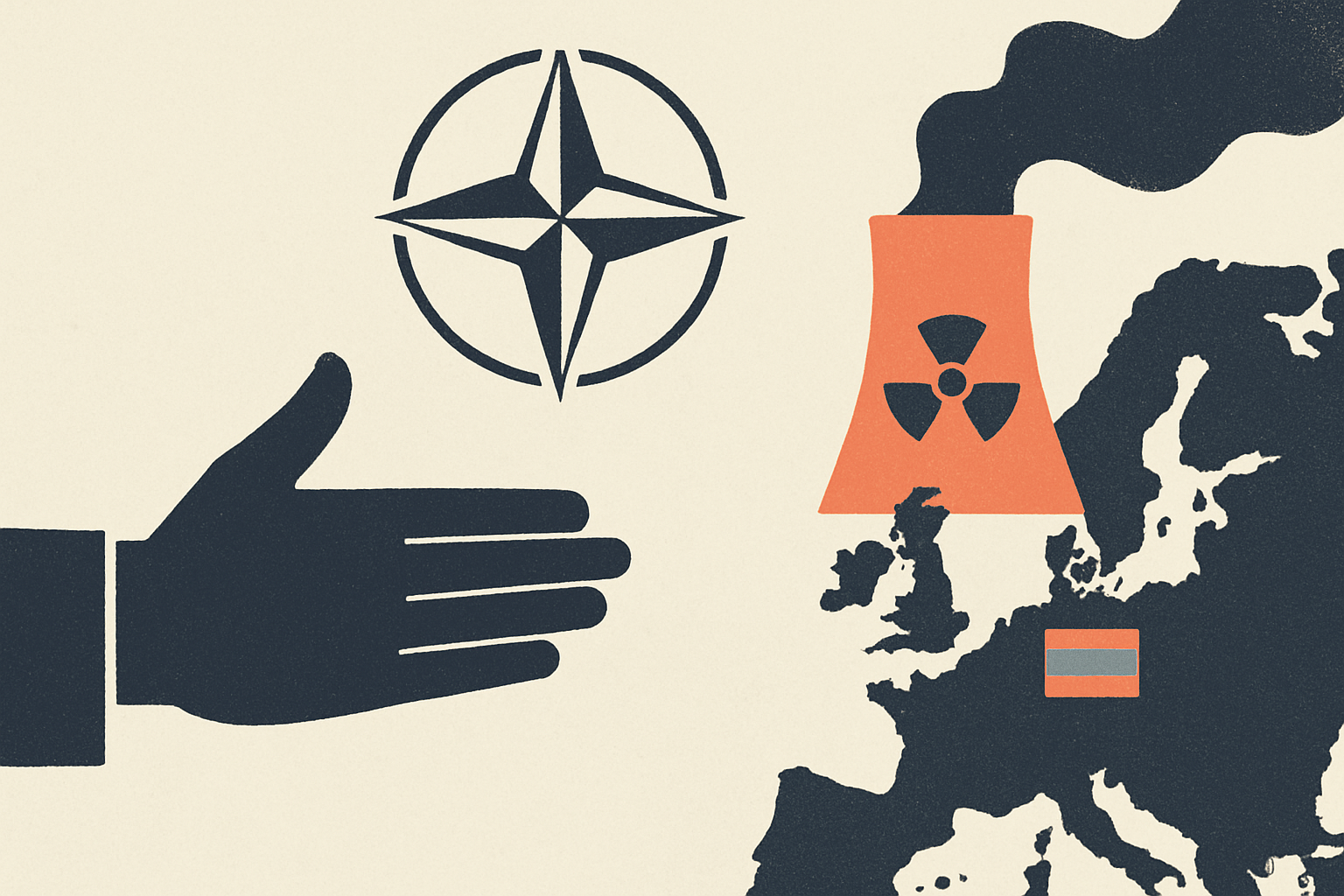
NATO leaders are set to reaffirm an "ironclad commitment" to collective defense at this week's summit in Ankara, language carefully preserved even as the Trump administration signals a more transactional approach to alliance obligations. The communiqué arrives as Germany's new chancellor Friedrich Merz publicly defended his military spending push against Trump's criticism, framing it not as a response to American pressure but as a sovereign decision driven by threat assessment. That distinction matters. When a head of government feels the need to assert that defense outlays are voluntary rather than extorted, the credibility of the umbrella is already in question.
Germany also held urgent talks with Beijing after reports surfaced that China is training Russian soldiers, a potential crossing of a threshold that would formalize Sino-Russian military cooperation beyond equipment sales. If verified, it would validate the thesis that Europe faces not one revisionist power but a coordinated axis, a scenario that makes Baltic and Central European defense planning far more capital-intensive. Lithuania appears to have run that calculation: its parliament just agreed to remove the constitutional ban on nuclear weapons, clearing the path for NATO infrastructure and warheads on its soil. Constitutional amendments of this kind do not happen on short timelines. The vote reflects a multi-year shift in threat perception, now accelerated by uncertainty over American staying power.
Meanwhile the United States is blocking UN support for the Somalia peacekeeping mission, according to diplomatic sources, a move that risks collapse of the African Union operation and a return of al-Shabaab territorial control. The decision aligns with the administration's broader pullback from multilateral security commitments that do not map to core strategic interests. Ukraine continues to absorb Russian strikes—thirty killed in a single Kyiv attack this week—while Poland's Donald Tusk said Ukraine wants to lower tension but must "confront history," a reference to unresolved WWII-era grievances that still complicate regional solidarity.
The pattern is consistent. European states are moving from rhetorical commitment to structural preparation—spending, constitutional revision, infrastructure. The US is pruning commitments that do not pass a narrow cost-benefit test. The gap between those two trajectories is where defense contractors, nuclear suppliers, and anyone holding European sovereign debt should be looking. If the umbrella is only open in some weather, you buy your own coat.
Sources · 9
Warsh and peace - Reuters
Reuters Business
NATO leaders including Trump to affirm 'ironclad commitment' to collective defence in Ankara, summit text says - Reuters
Reuters Business
Germany held urgent talks with Chinese envoy over report of China training Russian soldiers - Reuters
Reuters Business
In riposte to Trump, Merz says Germany can defend its military spending push - Reuters
Reuters Business
Somalia peacekeeping mission at risk as US blocks UN support, sources say - Reuters
Reuters Business
Ukrainian rescuers clear rubble as Kyiv mourns 30 killed in Russian attack - Reuters
Reuters Business
South Africa deploys troops to bolster security during anti-migrant protests - Reuters
Reuters Business
Poland's Tusk says Ukraine wants to lower tension, should confront history - Reuters
Reuters Business
Lithuania agrees to remove constitutional ban on nuclear weapons - Reuters
Reuters Business
Matched signals
Lattice signals Numen pinned to this story at publish time.
No matched signals on this story.
Unlock the analytical widgets on every article — signal matches, Trends snapshots, X overlays, agent reasoning — with a Member account.
Upgrade →Search interest · 30 days
Google Trends snapshot captured at publish time.
Search interest for “NATO defense spending”
0% · 30d
Snapshot · captured 7/4/2026· Google Trends · scaled 0–100 to peak in window.
Unlock the analytical widgets on every article — signal matches, Trends snapshots, X overlays, agent reasoning — with a Member account.
Upgrade →On X right now
Top engagement posts about this topic, ranked by likes + retweets + quotes.
Anadolu English @anadoluagency
12 eng52d📌 Defense spending, burden-sharing, Türkiye: What the US wants from NATO's Ankara summit ⤵️ 🔳 Trump administration heads to NATO summit seeking proof allies will follow through on 5% defense spending pledge 🔳 US says Ankara meeting will be the first real test of the https://t.co/PCzhPt7XQU
View on X →🦋 Laraib Fatima 🦋 @Laraib_Fatiima
5 eng52d🌍 Trump Questions NATO Spending as Alliance Debate Continues Donald Trump has again criticized NATO spending, arguing that the United States contributes significantly more than many allies. Defense spending and burden-sharing have remained major topics in discussions among NATO https://t.co/1gHfcprpWx
View on X →Russell Shaw @therussellshaw
0 eng52dTrump’s NATO Tantrum Trump broke the silence with a rant about NATO, posting a graphic claiming the United States spends $999 billion on defense while allies like the UK, France, Italy, and Poland spend a fraction of that, and complaining the relationship “is not reciprocal.” He https://t.co/nAojQIydeH
View on X →Tower Post @TowerPostNews
0 eng52dLithuanian president warns NATO could fracture over defense spending https://t.co/sVhfbflPgb
View on X →Packet Commander ⚡️ @JAVI_MEI
0 eng52dNATO leaders touch down in Ankara for one of the alliance's most consequential summits in years Trump reigniting the defense-spending fight, fresh Russia tensions, and hints Turkey could rejoin the F-35 program. Straight Talk breaks it down live from the Turkish capital. #NATO https://t.co/TSu3QWBwvZ
View on X →
Unlock the analytical widgets on every article — signal matches, Trends snapshots, X overlays, agent reasoning — with a Member account.
Upgrade →Your read
How did this article land?
Three sliders. Optional comment. Anonymous is fine.
Open to anyone. One response per reader.