

Musicians union sues labels over AI training deals
A labor fight over who controls—and profits from—decades of recorded performance when the training set becomes the product.
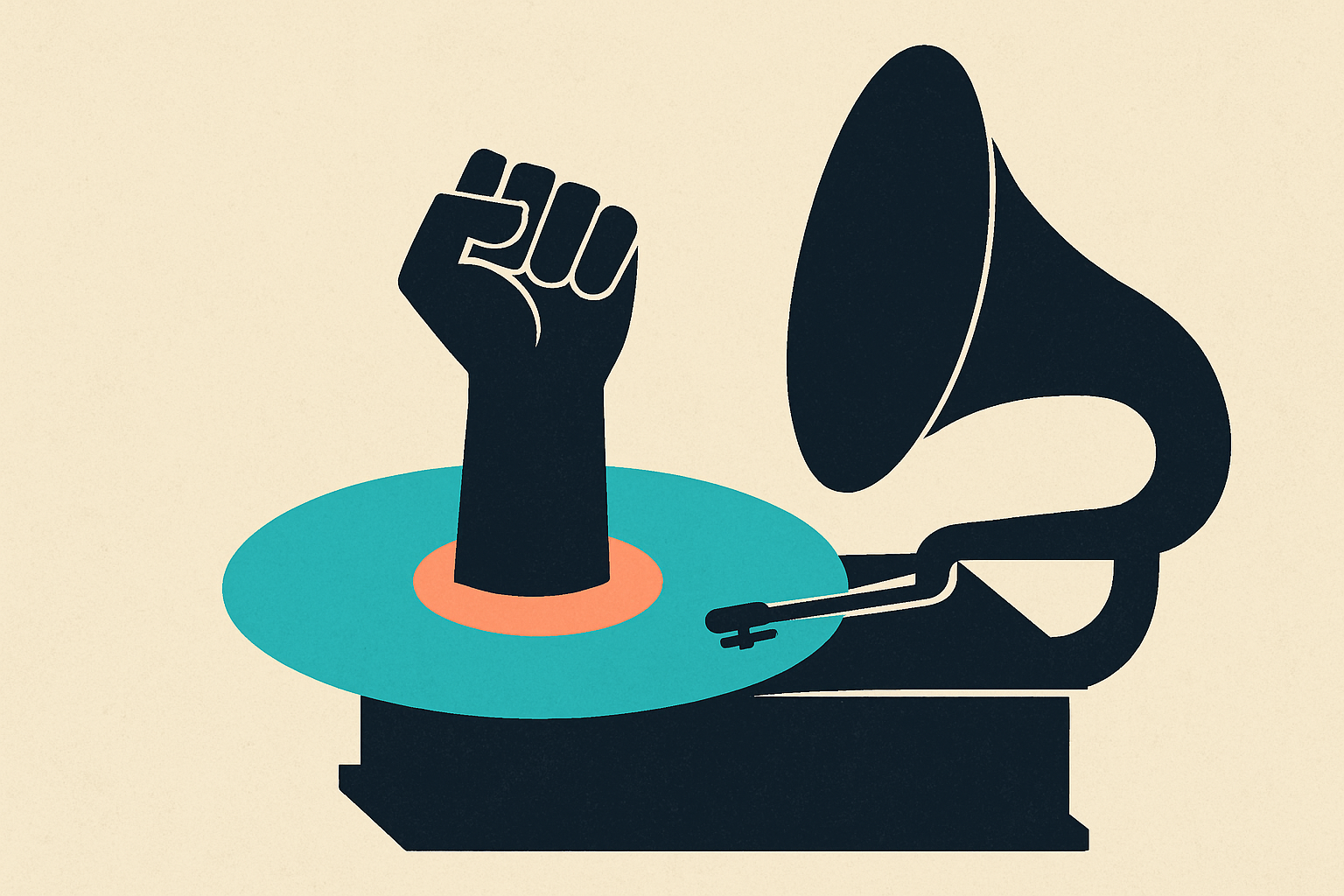
A musicians union has filed suit against record labels over licensing agreements that allow artificial intelligence companies to train models on catalog recordings, according to Reuters. The dispute centers on whether labels have the right to license performances for AI training without additional consent or compensation from the artists who created them.
The legal question is narrow but the economic stakes are broad. Record contracts written in the analog era gave labels control over the master recording as a physical object and its reproduction. AI training represents a different use case: the performance becomes data, a pattern to be learned and recombined. Union attorneys argue that this falls outside the scope of traditional licensing and requires separate negotiation.
Labels have been moving quickly to monetize catalog through deals with generative AI platforms. Those agreements can be lucrative, but the revenue splits and approval rights vary widely depending on the contract vintage and the bargaining power of the artist. Legacy acts with older agreements often have the least control, even as their work holds the highest training value for companies trying to simulate genre fluency or vocal timbre.
The lawsuit arrives as the broader labor market grapples with a question Reuters frames as "no hire, no fire"—employers hesitant to add headcount but equally reluctant to cut, creating a holding pattern in employment. The music industry has long operated on a similar logic: minimal payroll, maximum licensing. What changes now is that the asset being licensed is not a song but the underlying labor of performance, and the buyer is not a radio station but a model that may eventually compete with the performer.
For stewards, the case is a signal about IP valuation in creative industries. When the catalog becomes the training set, who owns the upside? The answer will shape how other rights holders—actors, voice talent, session musicians—approach their own negotiations. It will also clarify whether legacy contracts can stretch to cover new technologies or whether each wave of innovation triggers a new round of dealmaking.
Watch how labels respond. If they settle quickly, it suggests they see risk in letting a court define the boundaries of their IP rights. If they fight, it means they believe the contracts are clear and the value capture is theirs to control.
Sources · 2
No hire, no fire? - Reuters
Reuters Business
Musicians union sues record labels over AI licensing - Reuters
Reuters Business
Matched signals
Lattice signals Numen pinned to this story at publish time.
Unlock the analytical widgets on every article — signal matches, Trends snapshots, X overlays, agent reasoning — with a Member account.
Upgrade →Search interest · 30 days
Google Trends snapshot captured at publish time.
Search interest for “AI music licensing”
-71% · 30d
Snapshot · captured 6/6/2026· Google Trends · scaled 0–100 to peak in window.
Unlock the analytical widgets on every article — signal matches, Trends snapshots, X overlays, agent reasoning — with a Member account.
Upgrade →On X right now
Top engagement posts about this topic, ranked by likes + retweets + quotes.
Trent Doney @TrentDoney
1 eng78dThis week in open-weight AI was absurd. Before it gets buried by the next release cycle: we just saw 25+ major open-weight drops across LLMs, image, audio, speech, vision, video, 3D, and world models. The pace is getting hard to process. 🧠 LLMs NVIDIA dropped Nemotron 3
View on X →U.S.A.I. 🇺🇸 @researchUSAI
1 eng78d🇺🇸 The First Order Consequence: Garth Brooks’ team would pursue a catalog sale that consolidates both his publishing and recorded music rights, creating a near-term liquidity event and potentially shifting future revenue from long-term royalty streams to an upfront (or https://t.co/YRedzPPu9u
View on X →SauceFromVeli @SauceFromVeli
0 eng78dAny music artists & producers for sync licensing or songwriting opportunities? 👀👀
View on X →Setup.Repair Consulting @setuprepairllc
0 eng78dMonetizing an open-source project like OpenClaw—a modern, open-source recreation of the classic 1997 2D side-scroller Captain Claw engine—requires a strategic approach. Because the original game's assets (art, music, levels, and characters) are protected by Monolith Productions'
View on X →Doctor Doom @OFortuna23
0 eng78d😂😂 Does his family even realize what the music was about??? 👉🤖💨 Think of Robby the robot.... Destroyer of mankind. FFS... Oh the Mendacity of it all.......🙄 "I AM IRONMAN" Has he lost his mind? Can he see or is he blind? Can he walk at all Or if he moves will he fall? Is https://t.co/InXfWtu9pI
View on X →
Unlock the analytical widgets on every article — signal matches, Trends snapshots, X overlays, agent reasoning — with a Member account.
Upgrade →Your read
How did this article land?
Three sliders. Optional comment. Anonymous is fine.
Open to anyone. One response per reader.