

South Korean vessel struck in Strait of Hormuz, Seoul attributes to Iranian missile
South Korea's Ministry of Foreign Affairs has publicly attributed a ship strike to Iranian ordnance, marking the first named attribution from Seoul in the Red Sea / Hormuz escalation cycle.
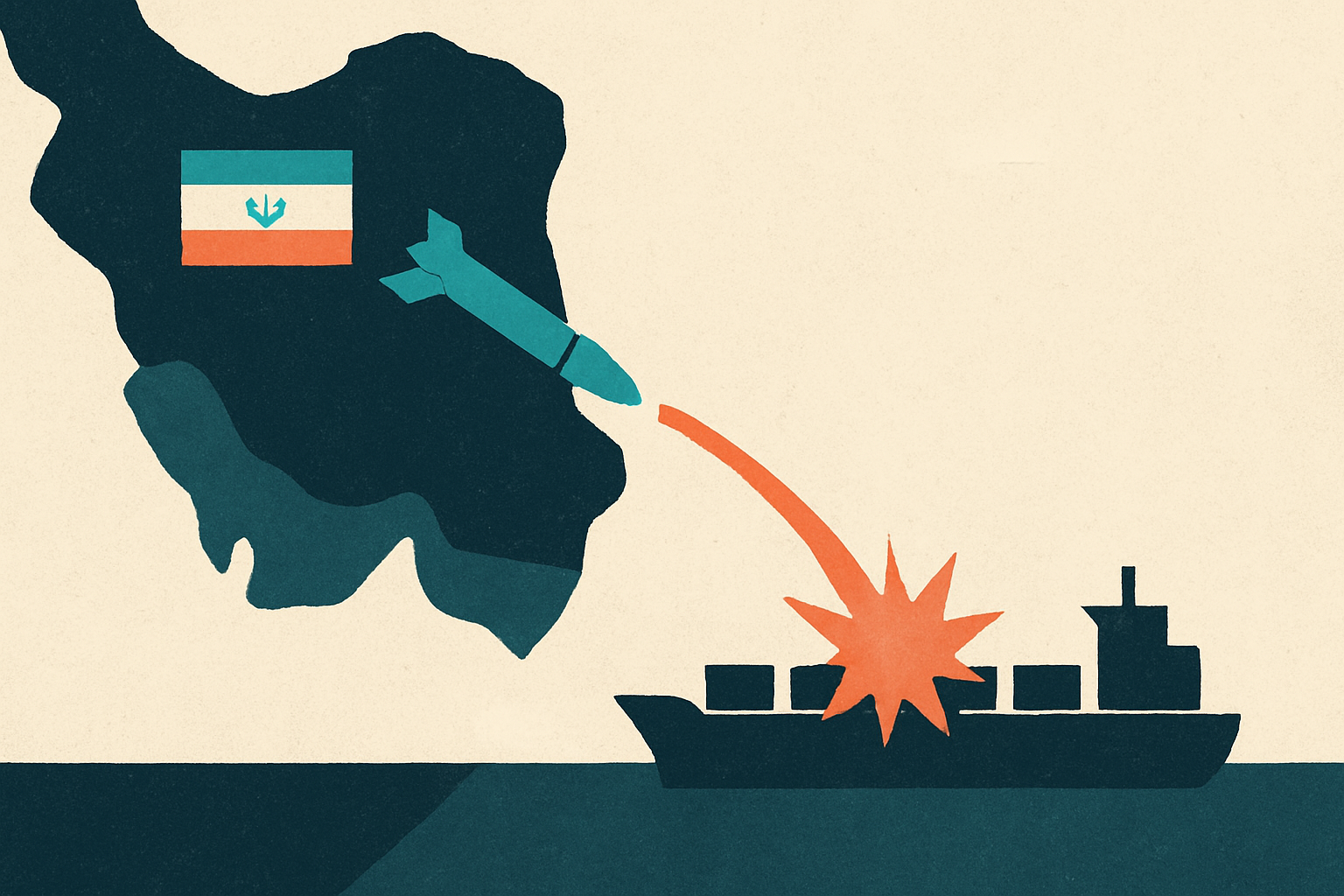
South Korea's Ministry of Foreign Affairs stated this week that an attack on a South Korean-flagged vessel transiting the Strait of Hormuz likely involved an Iranian missile. The ministry did not specify the vessel class, the date of the incident, or whether the ship was commercial or had any defense-related cargo. Reuters reported the statement without additional sourcing from Iranian authorities or independent verification.
The attribution is notable because South Korea has historically avoided naming Iran in maritime incidents, even when regional allies have done so. Seoul's calculus appears to be shifting. The statement follows a period of heightened tension in the Strait of Hormuz and adjacent waters, where Houthi forces—supplied and coordinated by Iran—have targeted commercial shipping in the Red Sea since late 2023. South Korea is a major shipbuilding nation and a significant importer of Gulf crude; any sustained disruption in the strait has direct supply-chain and insurance implications for Korean-flagged or Korean-insured vessels.
The timing of the attribution coincides with a broader Korean recalibration on security policy. Separately, South Korea has faced Chinese military pressure in the South China Sea; China's People's Liberation Army claimed this week it drove away a Dutch frigate operating in the region, a signal that Beijing is escalating its response to European naval transits. South Korea does not have a direct naval presence in the South China Sea but has deepening defense ties with the United States, Japan, and Australia—all of whom do.
Seoul's willingness to name Iran may also reflect a view that the risk of Iranian retaliation—economic or kinetic—is now outweighed by the strategic benefit of signaling alignment with the United States and Gulf partners. South Korea has not imposed comprehensive sanctions on Iran but has complied with UN Security Council measures and has curtailed oil imports under U.S. pressure. The ministry has not yet announced whether it will seek redress through the International Maritime Organization or pursue bilateral channels.
The incident adds to the growing list of named maritime disruptions in chokepoints that matter for Asian energy and container flows. The market has priced persistent Red Sea risk; it has not yet priced a sustained closure or militarization of Hormuz. Seoul's statement is one signal that governments are beginning to treat these disruptions as durable rather than transient.
Sources · 3
South Korea says attack on ship in Strait of Hormuz likely involved an Iranian missile - Reuters
Reuters Business
China's military says it drove away Dutch frigate in South China Sea - Reuters
Reuters Business
Samsung pay deal marks seismic change for South Korea, emboldening unions - Reuters
Reuters Business
Matched signals
Lattice signals Numen pinned to this story at publish time.
No matched signals on this story.
Unlock the analytical widgets on every article — signal matches, Trends snapshots, X overlays, agent reasoning — with a Member account.
Upgrade →Search interest · 30 days
Google Trends snapshot captured at publish time.
Search interest for “Strait of Hormuz”
-52% · 30d
Snapshot · captured 5/27/2026· Google Trends · scaled 0–100 to peak in window.
Unlock the analytical widgets on every article — signal matches, Trends snapshots, X overlays, agent reasoning — with a Member account.
Upgrade →On X right now
Top engagement posts about this topic, ranked by likes + retweets + quotes.
Egypt's Intel Observer @EGYOSINT
2 eng89dIn response to Iranian official reports claiming that Iran and Oman would manage shipping through the Strait of Hormuz, Trump fired back: “Oman will behave just like everybody else, or we’ll have to blow them up.” Absolutely wild https://t.co/LhJsbsacJu https://t.co/KXenzOFKCj
View on X →Josh Linville @JLinvilleFert
1 eng89dQ3 and Q4 NOLA urea futures are officially trading below where barge values were the day before the Strait of Hormuz closed. I know that timeframe doesn't help sidedress buyers, but it is a massive win for the market.
View on X →Self Made Traders @smtofcl
0 eng89dBREAKING: 🇺🇸 President Trump on the Strait of Hormuz: → “Nobody is going to control it — the U.S. will watch over it.” → Warns Oman: “Behave… or face serious consequences.” → Reaffirms U.S. oversight of the Strait Bold words in a critical global chokepoint 🌍⚡ #Breaking https://t.co/wVkMXdHHM3
View on X →Simon Ateba @simonateba
0 eng89dTrump Says Oman “Will Behave” or “We’ll Have to Blow Them Up” During Strait of Hormuz Warning https://t.co/sWks4Nszho
View on X →Bonita K Ronay @BKKliberty
0 eng89d@POTUS @SecWar 'Trump card': The US Navy has no way to reopen the Strait of Hormuz and Iran knows it The Art of the Deal obviously a work of fiction.
View on X →
Unlock the analytical widgets on every article — signal matches, Trends snapshots, X overlays, agent reasoning — with a Member account.
Upgrade →Your read
How did this article land?
Three sliders. Optional comment. Anonymous is fine.
Open to anyone. One response per reader.