

Supreme Court narrows geofence warrants; SEC fines Merrill $7.5M for surveillance lapses
Privacy advocates win limits on location dragnet orders while regulators penalize a bank for failing to flag suspicious trades—two edges of the same compliance sword.
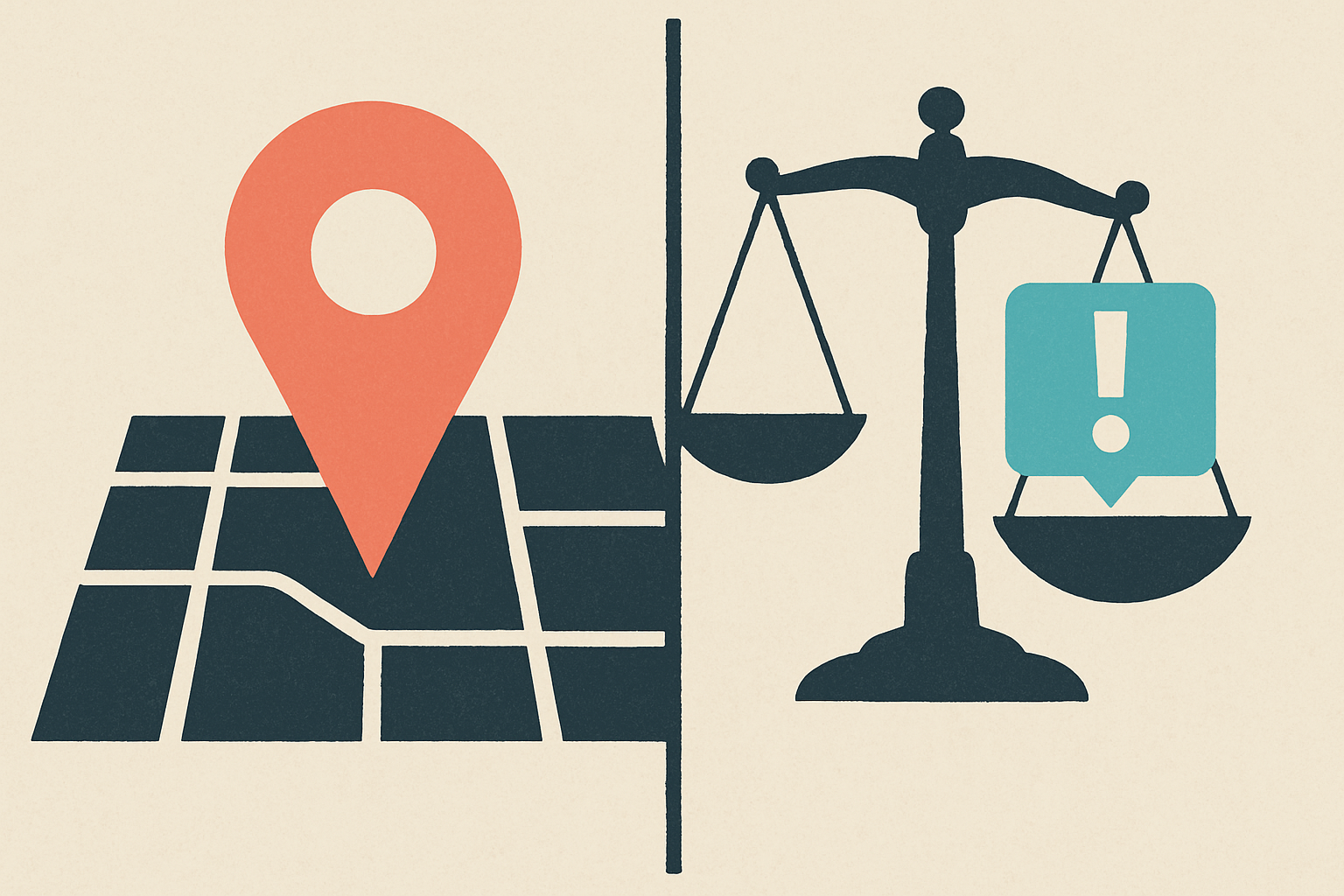
The Supreme Court handed privacy advocates a meaningful win by ruling that geofence warrants—broad demands for location data on everyone near a crime scene—are protected by Fourth Amendment privacy rights. The decision stops short of an outright ban but imposes limits on law enforcement's ability to cast a dragnet over whole neighborhoods based on cell-tower and GPS data. TechCrunch called it a major victory; the narrowing principle is what matters.
The same day, the SEC fined Bank of America's Merrill Lynch $7.5 million for failing to flag enough suspicious activity in client accounts. The enforcement action targets the firm's anti-money-laundering surveillance program, a compliance obligation that sits at the intersection of privacy and policing. Merrill did not catch what it should have caught.
These cases form a bracket. One limits how much the state can vacuum up without probable cause. The other punishes a private actor for not vacuuming enough on the state's behalf. The tension is not new, but it is sharpening. Financial institutions are expected to act as deputized monitors while courts rein in direct government overreach.
The compliance cost of that gap falls on the intermediary. Merrill's $7.5 million is a rounding error for BofA, but it signals that the SEC is still enforcing the plumbing even as courts redraw the pipes. For firms operating in both payments and data, the ruling and the fine together clarify where the line is being drawn this quarter: less warrantless mass collection, more internal scrutiny of what you already hold.
Meanwhile, a Michigan judge blocked Kalshi from offering sports bets to state residents, a reminder that prediction markets still face state-by-state enforcement risk even as federal courts have opened the door to event contracts. The geofence ruling may offer Kalshi a privacy argument in future challenges, but for now the company is still fighting on jurisdiction and gaming law, not constitutional grounds.
Sources · 4
Michigan judge blocks Kalshi from allowing residents to place sports bets - Reuters
Reuters Business
US SEC fines BofA's Merrill Lynch $7.5 million for not flagging enough suspicious activity - Reuters
Reuters Business
As Supreme Court's term nears its end, three major Trump rulings due - Reuters
Reuters Business
In major privacy win, Supreme Court rules geofence warrants are protected by privacy rights
TechCrunch
Matched signals
Lattice signals Numen pinned to this story at publish time.
No matched signals on this story.
Unlock the analytical widgets on every article — signal matches, Trends snapshots, X overlays, agent reasoning — with a Member account.
Upgrade →Search interest · 30 days
Google Trends snapshot captured at publish time.
Search interest for “geofence warrant”
0% · 30d
Snapshot · captured 6/30/2026· Google Trends · scaled 0–100 to peak in window.
Unlock the analytical widgets on every article — signal matches, Trends snapshots, X overlays, agent reasoning — with a Member account.
Upgrade →On X right now
Top engagement posts about this topic, ranked by likes + retweets + quotes.
KOB 4 @KOB4
5 eng56dThe U.S. Supreme Court ruled geofence location searches must require a specific warrant, after the FBI gathered data from 3,100 devices at a mosque during a funeral. https://t.co/kWJrDQHQqq
View on X →NBC Bay Area @nbcbayarea
2 eng56dThe Supreme Court held that constitutional privacy protections extend to cellphone location information, ruling in the case of a bank robber whose identity was discovered through a geofence warrant. https://t.co/GDTJTiNPia
View on X →The New York Editorial @nyeditorialus
1 eng56dThe Supreme Court just ruled 6-3 that police need a strictly targeted warrant to search bulk cellphone location data. A massive win for digital privacy against geofence dragnets! Read more on our Website. #DigitalPrivacy #SupremeCourt #FourthAmendment https://t.co/bWCIizBwrA
View on X →News Channel 3 WWMT-TV @wwmtnews
0 eng56dThe Supreme Court on Monday ruled in favor of privacy protections for cellphone users' location history in the case of a bank robber whose identity was discovered through a geofence warrant. https://t.co/ZpjGvJq6k0
View on X →News 4 Reno @News4Reno
0 eng56dThe Supreme Court ruled in favor of privacy protections for cellphone users' location history in the case of a bank robber whose identity was discovered through a geofence warrant. https://t.co/WHdn6zhnEi
View on X →
Unlock the analytical widgets on every article — signal matches, Trends snapshots, X overlays, agent reasoning — with a Member account.
Upgrade →Your read
How did this article land?
Three sliders. Optional comment. Anonymous is fine.
Open to anyone. One response per reader.